Going Dutch: My Experience with Transit in Amsterdam
I recently returned from a Spring Break trip to Amsterdam with the family. The transit options and their ease of use were impressive, especially as an American. As we navigated around the area we rode the metro, trams, buses, ferries, and trains. Here are some thoughts on our experience.
Paying for rides with OVpay
Paying for our transit rides was made easy by the wide implementation of OVpay. OVpay is the Dutch system where payment on transit and intercity trains can be made by tapping a credit card, debit card, or mobile device. It is important to note you must tap in when you board (or enter the through intercity train platform gates) and tap out when you exit. If you do miss a tap out there is the ability fix this on the OVpay website or mobile app. If using OVpay it is important to note that each person will need a separate card or mobile device. It was easy to use and super helpful as a tourist and was available on all the transit and trains we took. We did not have to figure out where and how to purchase transit passes. Many cities around the world have gone to some version of this model, including New York City’s OMNY system.
Metro
Metro line 52 was the only one we used but we did use it several times to get between the neighborhood we were staying in and destinations like Amsterdam Central Station and the Amsterdam Nord neighborhood. There are five Metro lines in Amsterdam (line 50-54) but we only used line 52, also known as the North South line, which is the newest of the lines. It opened in July 2018. This is a good way to get to and from Amsterdam Central station. The line runs frequently (every 5-8 minutes at peak) and the stations we used were nice, featured elevators and escalators, and modern fare gates with OVpay enabled that users check in and check out at.
Tram
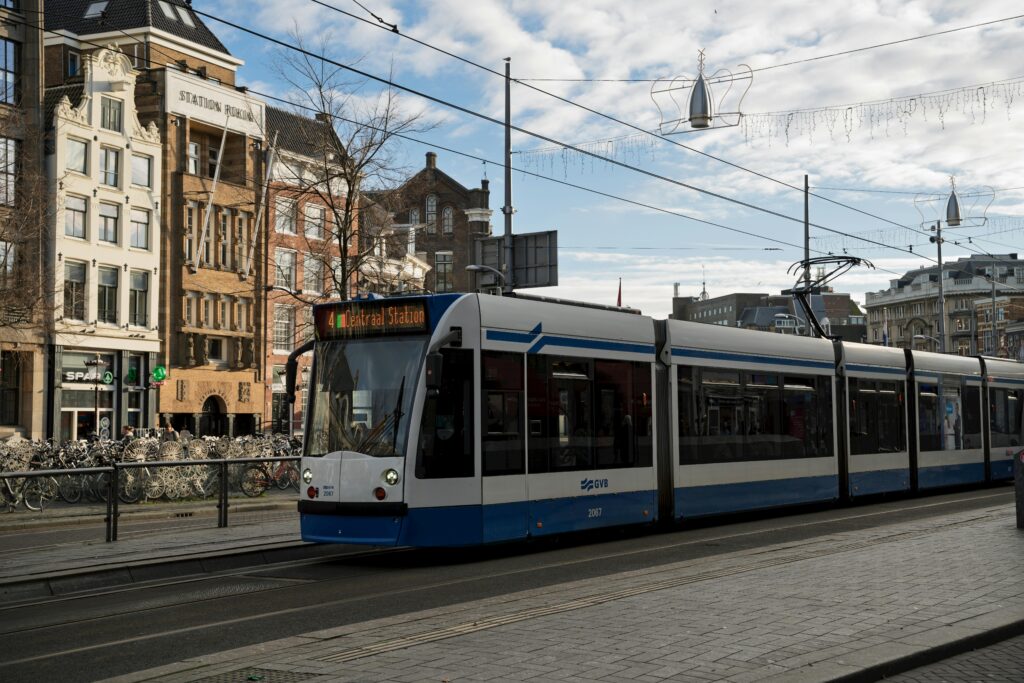
Trams were by far the transit mode we used most when getting around Amsterdam. Trams helped us get around to different neighborhoods and attractions in central Amsterdam. The trams featured OVpay card readers at each door and required riders to check in when boarding and check out when exiting. On the newer trams entry and exit was allowed through any door but on some of the older ones the middle doors are meant for exit only. On these trams the doors are clearly marked although at some of the tourist heavy stops there were still people that struggled with this. The older trams also feature a staffed conductor booth inside the back half of the tram. The trams we rode featured information screens showing upcoming stops and audible announcements were also played in Dutch and English. Throughout the trams there are red buttons to request a stop and near the doors there are green buttons that need to be pressed to open the door.
Ferry
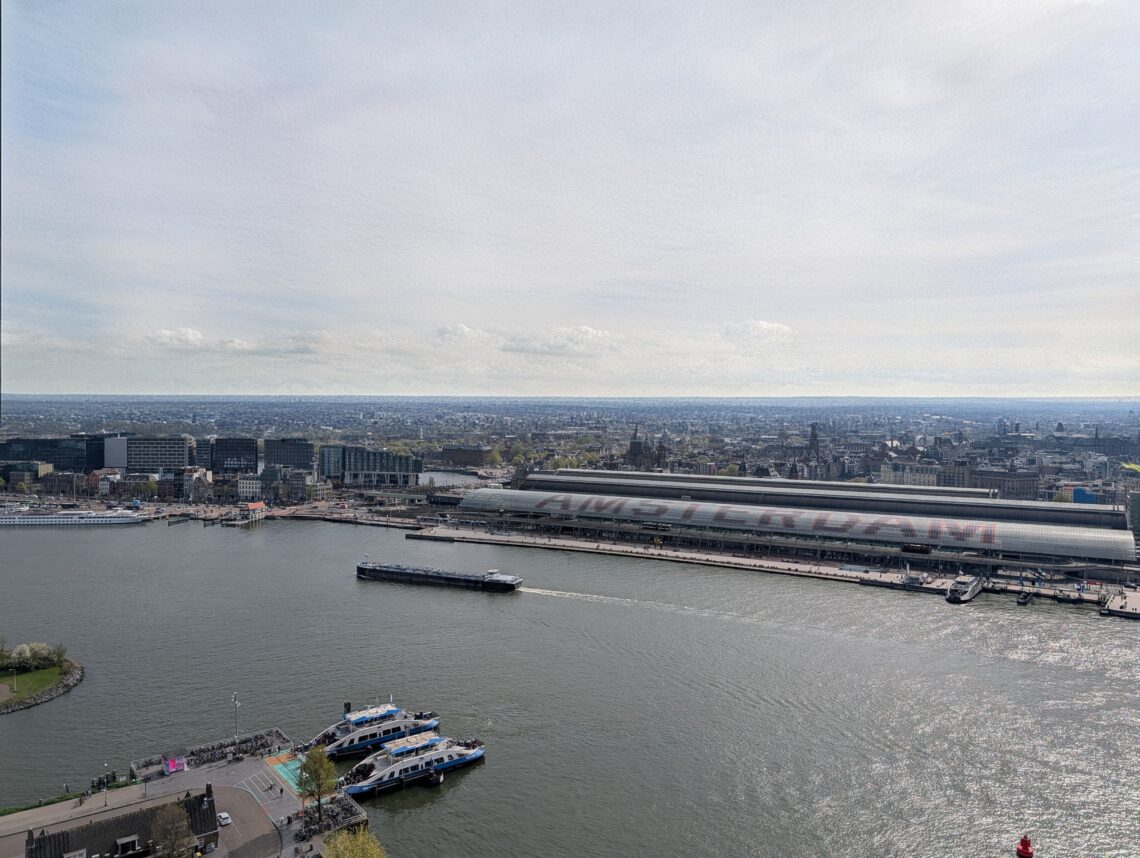
Amsterdam has several free ferries which cross the IJ river. The ferries are free for people on foot, bike, and moped and no ticket is needed. Several of these depart from Amsterdam Central Station. We took the route from Central Station to Buiksloterweg to cross the IJ river behind Amsterdam Central in order to get to the Amsterdam Nord neighborhood. The trip only lasted about 5 minutes, and we did not have to wait long for a ferry. It was a smooth ride with no issues. If you do take the ferry to Buiksloterweg/North Amsterdam you will be right near the A’DAM lookout, an observation deck on top of a building. It is a little bit touristy, but the views are pretty good (see cover photo on this post)
Bus
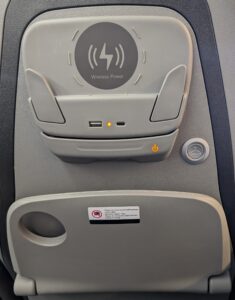
We did not take many buses on the trip. Buses do play an important role in Amsterdam public transportation, especially as you get further from the city center where the trams don’t run. We used the bus (bus 852 departing from Amsterdam RAI) to get from Amsterdam to Keukenhof to see the famous Netherlands tulips. We purchased our tickets as a package deal with Keukenhof gardens entrance tickets. The lines to board the bus in Amsterdam were long and traffic near Keukenhof was quite bad. The bus was comfortable but standing room only. On the return trip we took the bus to Haarlem, which was much less crowded. The only other bus trip we took was during our day trip to Utrecht where we took the route 341 bus operated by U-OV, the local Utrecht public transit agency. It was a smooth trip with no issues. It had OVpay and even had wireless charging at your seat.
Train
Like a lot of Americans I love exploring Europe’s intercity rail systems as it is just something we don’t have much of in America. This trip was no exception as we took a couple of day trips from Amsterdam via NS trains and took Eurostar to Brussels. The train trips we took included a round trip to and from Utrecht, a one way trip back to Amsterdam from Haarlem, and a short ride from Schiphol Airport to Amsterdam Central when we arrived.
Intercity trains in the Netherlands are run by Nederlandse Spoorwegen or NS. They run 3 main types of trains. Sprinters, which stop at all stations, Intercity, which are more limited stop, and Intercity Direct, which are high speed trains between major cities. Payment for trains in the Netherlands is handled by OVpay. There are readers on fare gates at all major stations and readers on the platforms at smaller stations. Riders need to tap to check in before boarding and tap to check out after disembarking. The Intercity Direct Trains require an additional supplemental cost on some segments. Riding in 1st class on intercity and sprinter trains also requires a supplement although not all sprinters have 1st class as NS has been converting 1st class cabins to add more 2nd class space.
We rode both Sprinters and Intercity trains, as we weren’t concerned about additional stops on the sprinters since our trips weren’t very far. They were all electrified and the ride was quiet and smooth. On the double decker trains there was more side to side swaying, probably due to the higher center of gravity, but it was not an issue. Stations in Haarlem, Utrecht, and Amsterdam were easy to navigate and announcements and info screens were in Dutch and English.
We also took Eurostar from Amsterdam Central to Brussels. This trip was fairly smooth and quick. The only minor issue was seat assignment. When you purchase a ticket on Eurostar continental (formerly Thalys) you do not get to select your seats like on airlines or some other rail systems but are assigned seats. We were assigned a coach number and 3 seats. When we boarded the train I discovered I was assigned a seat that didn’t exist. The train crew was very helpful and it sounds like this is a known issue. They found me a seat in the same coach as the rest of my family.
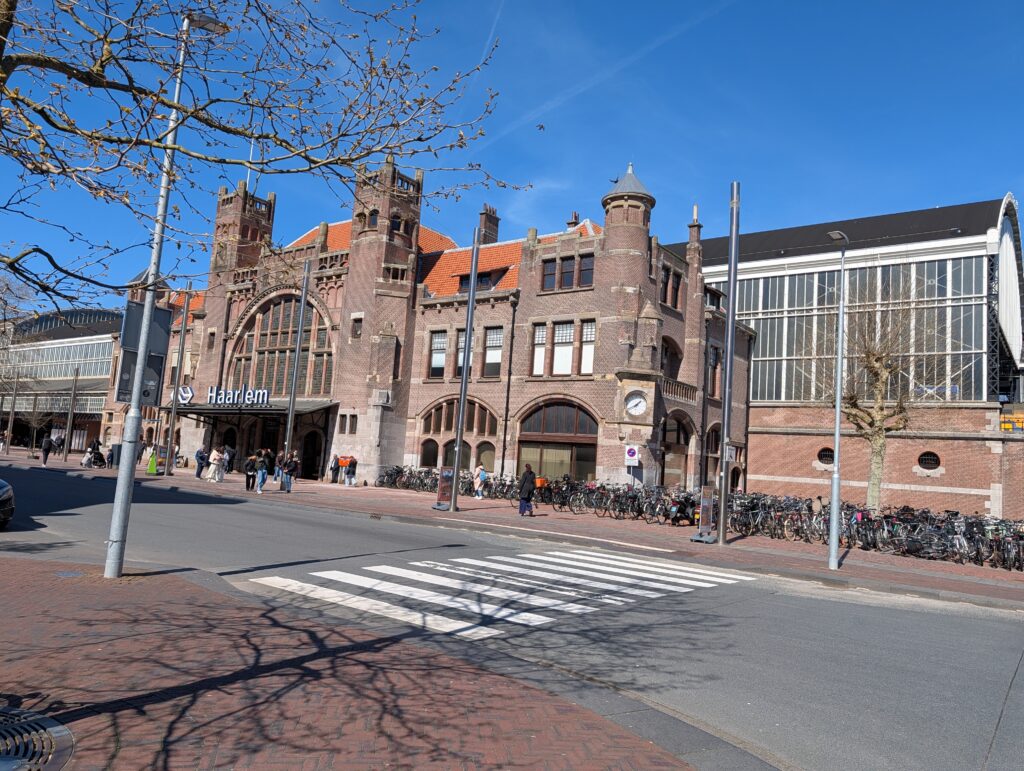
Overall transit in Amsterdam worked very well and I would highly recommend it for getting around the city, along with your walking and biking.
